Tell it anything
A task, a promise, a thought. From the app, from Telegram, or by emailing yourself, and photos by Telegram or email. Mindwren works out what it is and files it.
Text Mindwren like you'd text a friend: a thing to do, a promise someone made, a date to remember. It files it, keeps an eye on your mail and calendar, and tells you when something needs you.
Free during early access. No credit card.
Dentist Thursday 2pm, Main street 21
Got it, filed.
Works with the apps you already use
How it feels
You don't open it. It comes to you, on Telegram or wherever you read messages.
Today: the dentist at 14:00. Next up: send Anna the drawings, you promised them for today.On Telegram, before you've opened anything.
Your delivery has been moved to Thursday.The parcel task moves itself to Thursday. Nothing for you to do.
Dentist in 15 minutes, 14:00 at Main street 21.With the place, and anything you know that bears on it.
Done today: drawings sent to Anna. Tomorrow: the parcel, 10:00 to 12:00.What got done, what's still open, and what tomorrow holds.
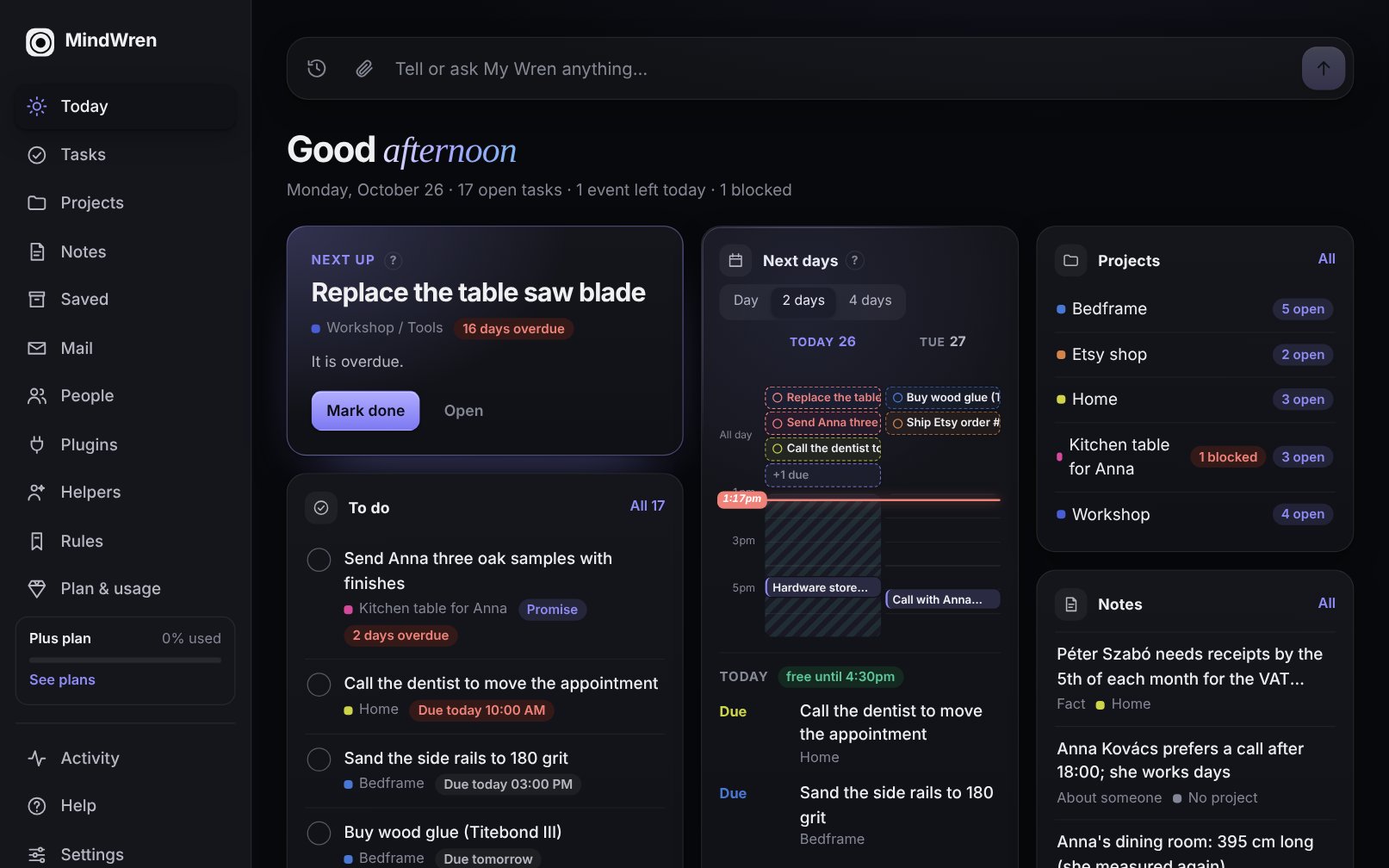
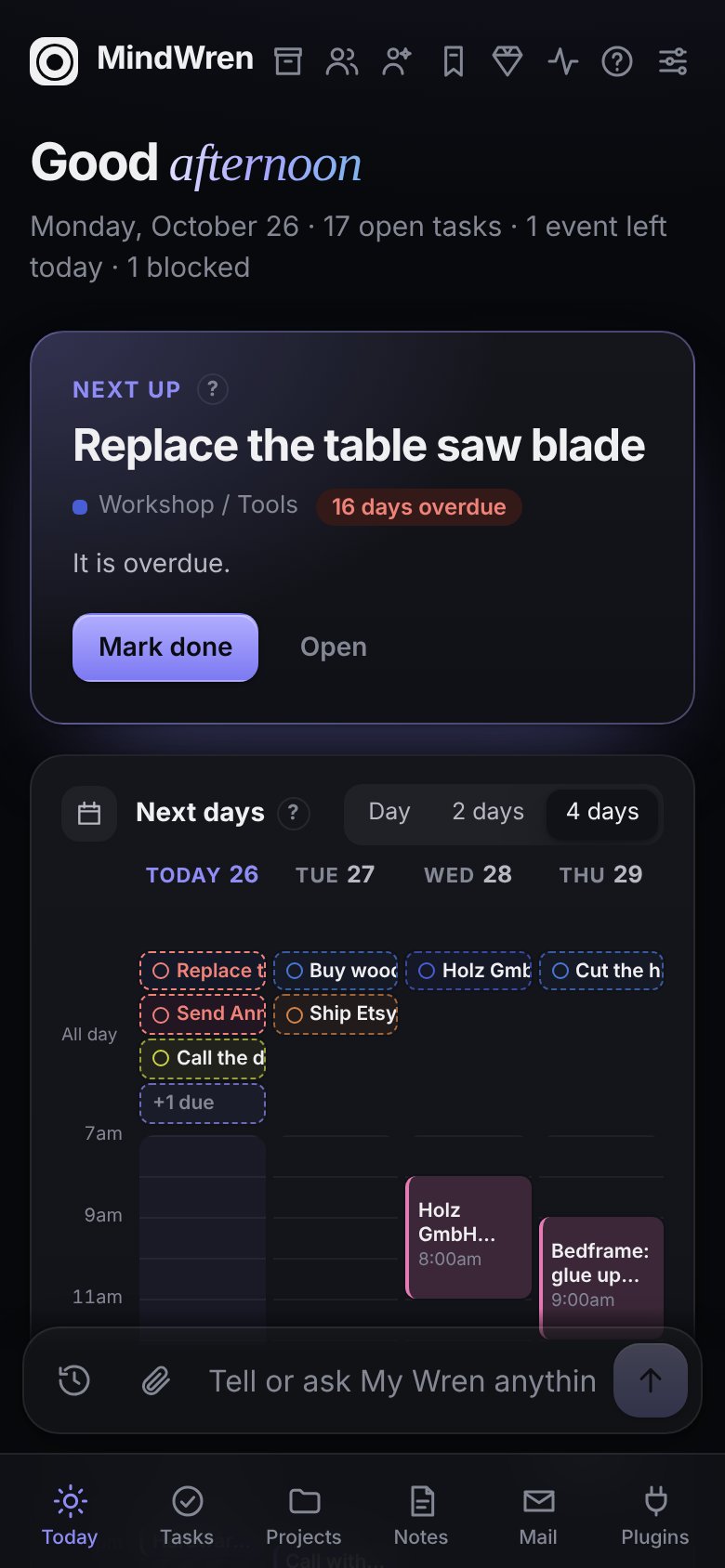
When you do open it: the Today page, with what's next, what needs a decision, and your week.
What it does
Tell it things. It sorts them, connects them and follows them up, so you don't have to.
A task, a promise, a thought. From the app, from Telegram, or by emailing yourself, and photos by Telegram or email. Mindwren works out what it is and files it.
Deliveries, deadlines, replies you were waiting for: they become tasks, update themselves and tick themselves off. Newsletters stay out.
It knows when you're busy or off, and puts your deadlines next to your meetings. With Google Calendar it also adds the appointments you tell it about, and moves things when you ask.
One page with what's next, what's due, your free time, who you're waiting on, and what's stuck.
Connect them with one sign-in. Ask about your week there, and they answer from your real tasks, calendar and notes, and can add new ones or set up a whole project from its files. Your switches and private things still apply.
A morning brief, an evening wrap-up, a weekly review, a heads-up before meetings, and a nudge when something has gone quiet.
Move a task it filed to another project once, and it does it right the next time.
Projects keep their own status from tasks, mail and code. Open a repository and Claude Code or Codex already knows what's open and what was decided.
Set up in one go
Already have a project in a folder, a repository or a pile of documents? Let Claude or ChatGPT read it and set it up in Mindwren for you.
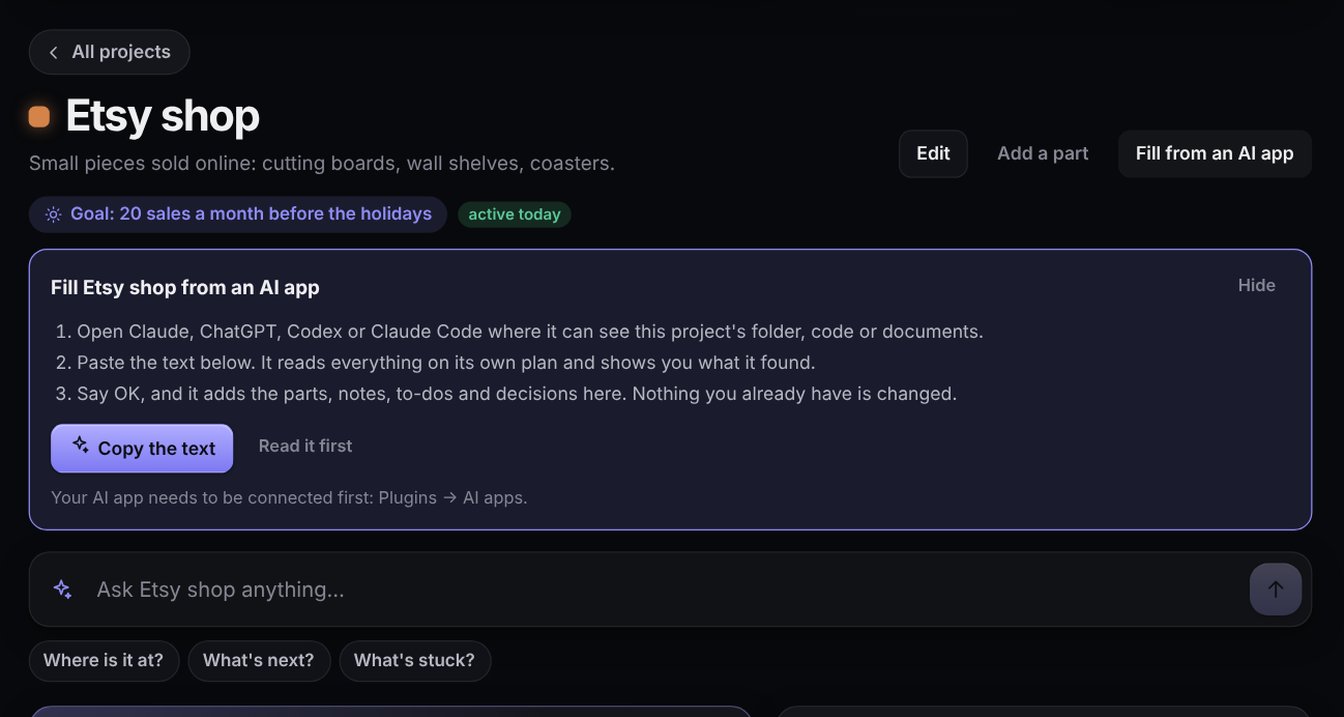
Every project page has Fill from an AI app. One tap copies the text.
In Claude, ChatGPT, Codex or Claude Code, where it can see the project's folder, code or documents. It reads them on its own plan and shows you what it found.
The parts, facts, to-dos, decisions and blockers land in Mindwren in one go, each in its place. Nothing you already have is changed, and one Undo takes it all back.
Why Mindwren
To-do apps and notes apps are places you have to go to. Mindwren is someone who keeps up.
You type the task, set the date, pick the list.
You say it once. Mindwren picks the project, the date, and who it's waiting on.
It waits for you to come back and check.
It checks your mail and calendar, and comes to you when something changed.
Done means you ticked it.
Done can mean the parcel arrived or the reply came. It ticks itself.
Your data
Every kind of change has a switch: do it, ask me first, or never. Asks come with Approve and Decline buttons.
Mark projects, calendars, repositories or mail senders private, and they are kept away from every AI model.
Each thing Mindwren does is written to an activity log in plain words, and most of it can be undone.
"I built Mindwren because I was the bottleneck. Every promise, parcel and meeting went through my head, and my head dropped things. I wanted something I could just talk to that would remember, connect the dots and come back to me at the right time. I run my own life on it every day. Now I'm opening it up, a few people at a time."
Pricing
Paid plans are not released yet. This is what they will look like at launch.
Free
Mindwren remembers
€0
AI for about 125 messages a month
To try it, for as long as you likePlusRecommended
Mindwren works for you
€14.99 a month
AI for about 1,500 messages a month
Or yearly, with two months freePro
Mindwren thinks with you
€34.99 a month
AI for about 4,000 messages a month
Or yearly, with two months freePlanned prices, VAT included. They may still change before launch. Free remembers everything you tell it; Plus and Pro also work for you on their own and include more AI each month (sorting your mail and writing summaries count too). Nothing can be bought yet.
Early access
Free
Until the plans open, Mindwren is free for everyone on the early-access list, with everything included.
Questions
No. That's the point. You talk to it like you would to an assistant; Mindwren files, connects and reminds. You can correct it, and it learns.
Telegram, Gmail, Google Calendar (or any calendar link) and GitHub. Claude and ChatGPT can connect to it too, so you can ask them about your day, and Claude Code and Codex can read your projects. More are coming, starting with Home Assistant.
It reads mail read-only. The AI reads each new email once to sort it, and Mindwren keeps only the sender, subject and a short preview. You can mark senders private, and their mail never reaches the AI.
No. You can ask it things, but its job is to keep your life in order while you do other things. Most days you'll hear from it before you open it.
It's free during early access. After launch there will be three plans: Free, Plus at €14.99 a month and Pro at €34.99 a month, VAT included, with two months free if you pay yearly. Free remembers everything you tell it. Plus also works for you on its own: mail sorted within minutes, an evening wrap-up and weekly review, meeting prep before every meeting. Pro thinks with you, with deeper answers about your projects. Every new account starts with 14 days of Plus, no card. These prices are not final yet.
Say it once. Mindwren keeps track, follows up, and tells you when something needs you.